Grain-free dog food has grown rapidly in recent years, both in pet stores and online. With more and more options available, you may be wondering whether it’s truly better to avoid wheat, corn or rice to feed your dog well.
Grain-free kibble is often presented as more natural or easier to digest—sometimes closer to a dog’s original diet. But the choice isn’t simply about removing grains. Some dogs digest them perfectly well, while others do better with a different formulation.





Grains aren’t automatically problematic for dogs. It depends on the quantity, the quality of the ingredients, and your dog’s individual profile.
In practice, several factors matter:
Recipe digestibility: starch needs to be properly cooked and included in the right proportion.
Overall nutritional balance: animal proteins, fats and fibre matter more than grains alone.
Individual digestive sensitivity: some dogs tolerate rice (and other digestible grains) very well; others may need a different formulation.
Activity level: very active dogs may require a specific nutrient density, with or without grains.
In certain targeted cases, a grain-free recipe can be tested in consultation with your veterinarian. The key is choosing a complete, balanced diet adapted to your dog, rather than systematically removing grains.
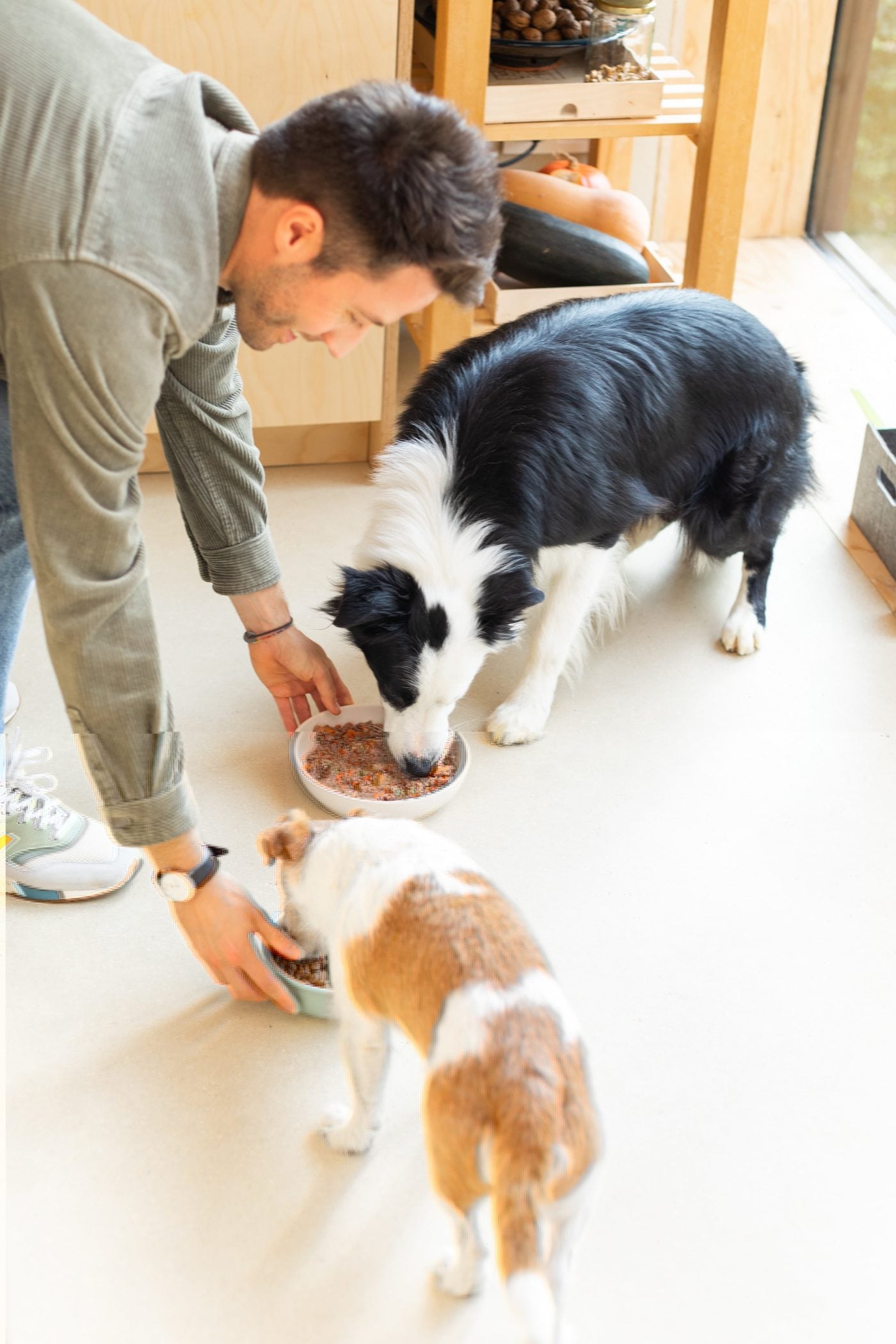
At Dog Chef, we believe every dog has specific nutritional needs. We offer complete recipes developed with veterinarians – some with rice or other digestible grains, others grain-free.
We focus on clearly identified animal proteins, carbohydrates chosen for digestibility, and a controlled balance of fibre, fats, vitamins and minerals. Our meals are cooked from natural ingredients, with no artificial preservatives, using gentle cooking. Our goal is simple: to give you transparent information so you can clearly choose what suits your dog best.

Votre navigateur est obsolète!
Mettez à jour votre navigateur pour afficher correctement ce site Web. Download Google Chrome